
By Savvas Bout, Founder of Prefixx. Last updated 23 September 2026.
Bulk IP leasing helps to alleviate the problem caused by your infrastructure growing faster than your procurement processes. By agreeing a single lease (covering a /20 or larger) you can meet business needs and announce routable IP space within 24 hours, without the associated cost of purchase, and without having to wait six-to-eight weeks for an RIR transfer. This streamlined leasing process eliminates the administrative overhead of managing multiple smaller allocations while maintaining full routing flexibility.
With short term leases, the cost efficiency gains can be undermined when the history of the numbers reputation, RPKI coverage, IRR accuracy and even the contract terms all cause problems for the leased numbers. Organizations running remote access infrastructure or VPN services are particularly vulnerable to reputation issues inherited from prior lessees.
We explain the basics of leasing large blocks of IP addresses in bulk. We go through block sizes and the regions in which the RIRs (major repositories for IP address allocation) serve. We review the key contractual terms in any IPv4 leasing agreement that will determine whether you have leased IPv4 addresses from a responsible lessor or not. Organizations deploying remote access infrastructure or VPN services often require dedicated address space to ensure stable connectivity and proper traffic management.
We explain the key documents required for the routing of IP addresses (LOA, RPKI ROAs, IRR route objects) before you start to advertise IP addresses on the Internet. Most importantly, we go through the checks that you should perform on any proposed block of IP addresses before you start to send traffic over them. Operators should also verify that WHOIS records are accurate and up-to-date to ensure proper contact information is visible to network administrators and abuse teams.
What is bulk IP leasing and how do IP resources work
Leasing large blocks of IP addresses in bulk instead of buying them is often referred to as "bulk IP leasing". Here the lessor keeps ownership of the IP address space, but grants the lessee routing authorization via LOA, RPKI ROA (Route Origin Authorization) and IRR route objects. This authorisation enables the lessee to announce the entire block of IP addresses (as if it were their own) via the BGP routing protocol.
What IP resources leasing actually involves
Leasing IP addresses is essentially a matter of rights, not a purchase of real property. Lessees control the routing of their addresses and can build out their networks on top of the block of IP addresses that have been leased. In the end, the lessor retains full title to the IP addresses. Lessees gain operational access to configure reverse DNS, manage RPKI objects, and update routing policies as needed throughout the lease term.
We handle the LOA, ROA and IRR objects required for leasing IP addresses, enabling a fully managed service for hosting providers from contract execution to BGP announcement, no registry formalities for the lessee.
Note that single-IP hosting add-ons typically are managed as a shared pool with potential hidden fees, whereas a bulk IP arrangement provides a dedicated IP block, including geolocation updates, that you manage independently. Many hosting providers and colocation facilities offer bulk arrangements that mirror what an ISP would provision, giving you direct control over routing and reverse DNS.
Minimum IP address space block size for bulk leasing
For companies using leased IPs for things like outbound email, proxies, or ad verification, the typical starting point is a /24, which then scales up in CIDR block sizes from there. Organizations often begin with smaller allocations and expand into multiple subnets as their infrastructure requirements grow across different services or geographic locations.
How are IP addresses and reputation managed on leased resources?
We actively maintain a good reputation on leased IP addresses. Lessors who prioritize reputation management typically provide responsive assistance when connectivity or deliverability issues arise, ensuring their support team can quickly address technical concerns.
- Blacklist scanning across 12 DNSBLs including Spamhaus ZEN.
- Geolocation correction via daily RFC 8805 geofeed updates.
- Reverse DNS management and abuse complaint processing.
- BGP monitoring for origin ASN and RPKI validity.
Technical support is always available to deal with any issues.
Why IPv4 leasing has become a primary market option
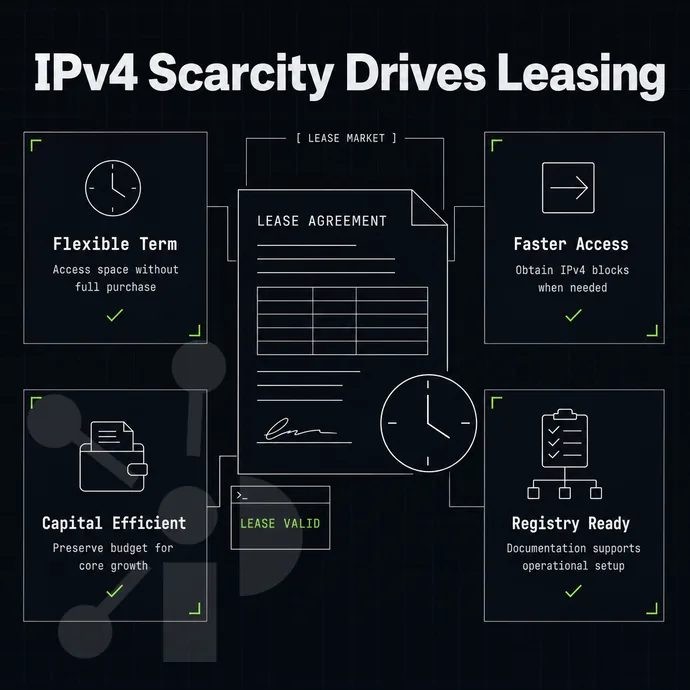
By 2011 all five free IPv4 address pools managed by the RIRs had been depleted.
IP reputation cost and long term commitment
Community data puts spot lease rates for IP addresses at $0.42 per IP per month. At that rate a /24 would run approximately $128/month. Buying the same /24 on the open market for normal prices would cost thousands of dollars upfront. Therefore for short-term projects, leased IPs, much like smart IP management, are far more cost efficient than purchasing depreciating assets with funds locked away for long periods.
IPv4 leasing use cases: digital marketing, SSL certificates, and more
Bulk IP leasing is typically ideal for short-term IP intensive campaigns and needs. These types of customers are usually digital marketing teams, ad-verification services. Additionally, other web services that require dedicated SSL IP and clean routed IP in large quantities benefit from quick setup on a month-by-month basis, as opposed to buying and owning the IP forever. Companies with fluctuating capacity requirements find that leasing avoids the capital commitment of ownership while preserving operational flexibility.
How long does IP reputation affect LOA after signing a bulk IP lease?
We generally provision to 24 hours from contract signing for new leases. In preparation for making changes live to customers, we prepare LOA, RPKI ROA, and IRR route objects for customers as part of our white-glove service to them as lessee.
Dedicated server deployment with geolocation modifications
Announce leased IP blocks from your dedicated servers or bring them into your data center by BYOIP. Prefixx takes care of all the necessary routing work. Your team just deploys and manages, we handle the registry administration for you.
| Factor | Lease | Purchase |
|---|---|---|
| Upfront cost | Low monthly rate | High capital outlay |
| Commitment | Flexible term | Permanent ownership |
| Routing paperwork | Included with Prefixx | Buyer arranges |
Once you understand why leasing IPv4 addresses is better than buying them, you have to choose the right block size and region for your workload. The choice depends on factors such as your anticipated traffic patterns, the number of services you plan to deploy, and whether you need addresses in a specific geographic region.
Block sizes, subnet size and IP address leasing plans explained
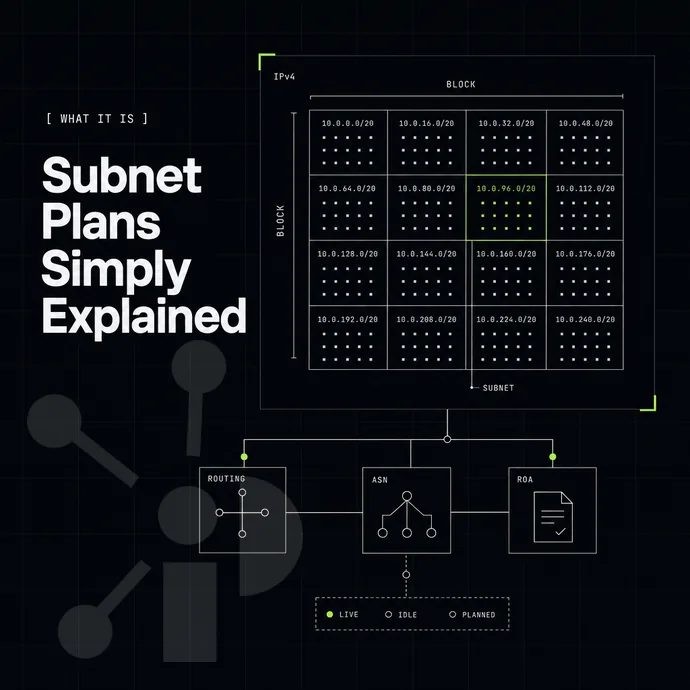
While bulk IP leasing has many advantages for organizations, selecting the wrong subnet size or contract length can lead to major routing problems or excessive expenses over time. Organizations must weigh the operational benefits of flexibility against the risk of committing to terms that no longer match their actual usage patterns.
Choosing your subnet size with internet service providers
- A good starting point is with a /24 (256 IPs). This is usually the smallest IP block that large transit providers include in the global routing table. A /24 is useful for short term projects, campaigns, for mobile devices or for small-scale applications in general.
- For medium-sized deployments, consider upgrading to a /22 (1,024 IP addresses). A /22 contains four contiguous /24s and you receive all four /24s under a single IP address announcement. Leased IPs are further discounted at this size of IP addresses with lower per-address rates than a single /24.
- For large environments running high volumes of infrastructure, a /20 or even /16 may be considered suitable. The larger IP leasing arrangements often offer better economics per address, however availability decreases at this scale.
Note: Never announce a block smaller than a /24. Most upstream providers filter it, and your IP space will be invisible to the internet. Routing policies treat subnets below this threshold as too granular for global BGP tables, making adherence to this minimum prefix length essential for reachability.
Can I lease IPv4 addresses from a specific RIR region such as ARIN or RIPE NCC?
If you need IP addresses in North America, you would lease ARIN IP addressing (e.g. IP blocks from ARIN). Similarly, organizations requiring addresses in Latin America would lease from LACNIC, the regional registry serving that territory.
For Europe and the Middle East, you would lease from the RIPE NCC (e.g. RIPE NCC blocks of IP addresses). The same size of leased IPs can have vastly different monthly rates depending on the registry that issued the space, thus the region you choose impacts your budget. Each registry maintains its own authorization procedures and documentation requirements that lessees must satisfy before the lease can be finalized.
Matching IP reputation to your lease terms timeline
- Short-term leases (1-3 months) are ideal for running ad campaigns or capitalizing on seasonal traffic spikes. Flexibility costs more per month but you won’t lock up your capital in IP addresses that you don’t need in the long run.
- Multi-year plans are generally more suitable for stable environments. Long term leasing agreements decrease the per address price, and allow your positive hosting reputation history to mature on leased IPs.
All routing paperwork is handled with a white-glove approach. We can discuss the appropriate block size and region for your operation. Our team ensures that all routing documentation and delegation records are prepared before setup, minimizing delays in your deployment timeline.
However, sizing out a block is only half the equation for an operator looking to deploy a block of compute. There are a number of other requirements that an operator looks for in a potential hosting provider.
Operators at companies evaluating bulk lease arrangements should verify that the provider can deliver not only the block itself but also the routing support and documentation needed for production deployment. Operators must also confirm that the provider's upstream networks support the announcement of portable space and can accommodate the customer's BGP peering requirements.
What data center operators gain from bulk IP address leasing
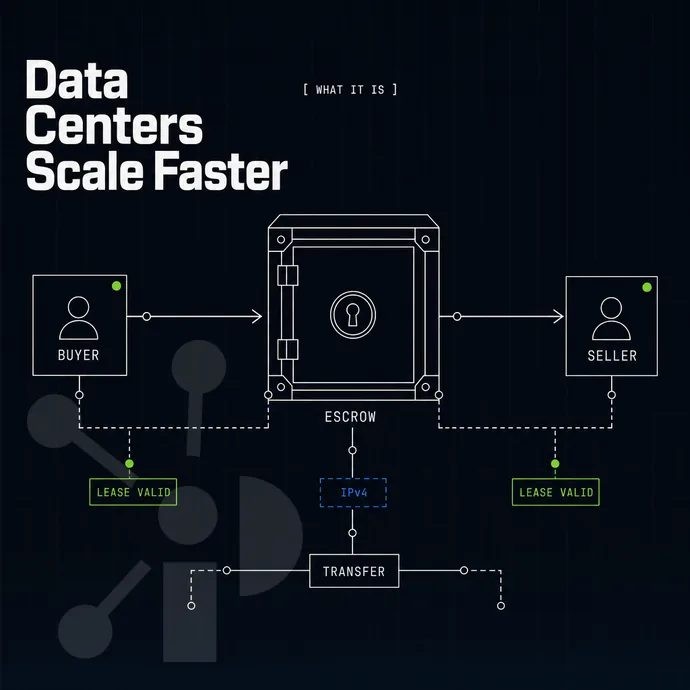
Dedicated server companies, data center operators, and ISPs face the same limit: customer IP demand exceeds available supply of IP addresses. We can help alleviate that constraint with geolocation modifications on a rental basis rather than purchasing all those IP addresses upfront.
Who drives bulk demand for DNS delegation
A hosting provider typically assigns IPs to a customer or service or even to a virtual instance. A mid-sized dedicated server platform can easily exhaust a /24 in no time. Each dedicated server deployment typically requires at least one routable address, making careful capacity planning essential for operators scaling their infrastructure. Operators building out multi-tenant environments must account for how their networks will scale as customer density increases across the infrastructure.
For VPN and egress services it is crucial to have geographically spread clean IP space in order to maintain a good IP reputation for all exit nodes. Email delivery services require stable RIR-registered IP blocks with proper PTR records and RPKI ROAs. Digital marketing and ad verification departments need portable IPv4 leasing space that resolves consistently in geolocation databases. An ISP delivering residential or business connectivity typically requires contiguous address space that can be delegated to customers with minimal fragmentation.
Global routing and why RIR registration matters
Announcing portable RIR-registered IP space from any upstream via BGP is what makes global routing flexibility possible in the first place. Space associated with a single ISP can’t be moved. The leased IPv4 addresses of a registered holder carry the same routing rights as space he owns himself, provided the necessary LOA and ROA are in place.
Managing your IP in multiple locations (PoPs) heavily depends on the portability of your IP space. Operators who run services across many networks rely on this portability to maintain consistent reachability and failover capability. This flexibility allows organizations to peer with multiple transit providers and content delivery networks simultaneously, ensuring redundancy and optimized path selection.
Bulk IP leasing service: accessing extensive IP resources
A well-structured offer for IP address block leasing, ideal for hosting providers, would include the block itself, an LOA announcement, RPKI ROA (Router Origin Authorization) publication, and IRR (Internet Routing Registry) route objects. A leasing provider that handles all of this for you takes the operational burden off of your team. Your team can then configure routing policies and filters once these authorizations are published. Providers who publish these authorization artifacts before handoff enable lessees to begin BGP sessions immediately without waiting for registry updates.
Prefixx comes with white-glove routing paperwork, every block of IP space is quality checked by Tixx, and has non-revocation guarantees. All of this can be provisioned within 24 hours which is important to customers waiting for live IP block. The provisioning process is managed by a dedicated support team that handles all technical coordination and documentation requirements.
What is the difference between leasing and buying IPv4 addresses?
Buying a transfer: Buying a transfer includes a full purchase of the resource via an RIR-recorded transaction. The transfer process involves submitting documentation to the registry and waiting for approval before the resource becomes officially yours. Registry approval typically requires proof of need and proper authorization from both the buyer and seller before the transfer can be recorded.
Leasing: Leasing a space of your choosing allows for DNS delegation of that designated space to be managed by the lessee for the term of the lease. The lessee gains full routing control and administrative access to the leased range throughout the contract period.
Leasing is for immediate need to provide ample capacity without high costs, whilst buying is for organizations building out long-term network infrastructure where they wish to maintain control of assets for extended periods of time. Organizations evaluating these options should weigh the financial benefits of leasing against the strategic advantages of ownership based on their deployment timeline and budget constraints.
One factor to note however is whether you need the block to appear under your own RIR handle. Regardless though, the real documentation needed to ensure a block of IPv4 addresses functions properly in production is the same regardless. Proper authorization from the registry is essential to update records and maintain control over the block under your handle.
Why choose Prefixx for bulk IPv4 leasing
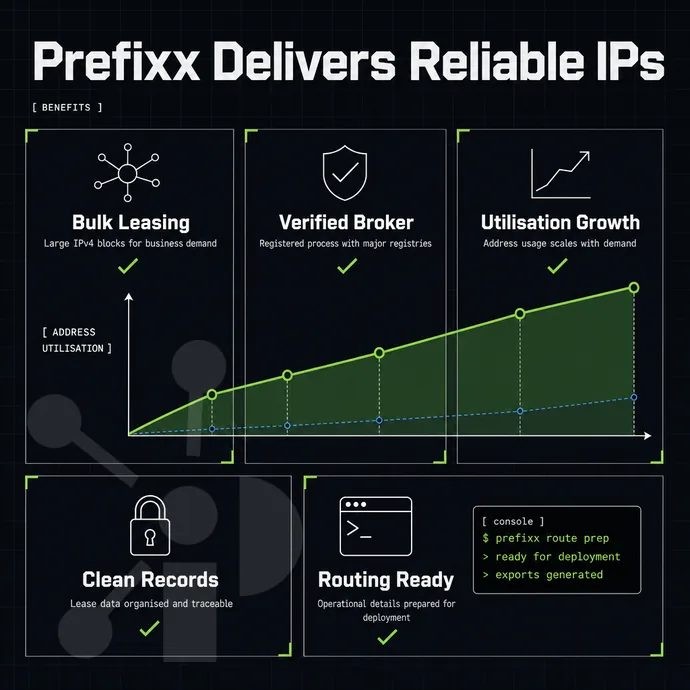
Prefixx is a registered IPv4 broker with ARIN, RIPE NCC and APNIC, specializing in bulk IP leasing for businesses that need large quantities of IPv4 addresses without the high costs of outright purchase. Every lease comes with white-glove service included: our team prepares the LOA, RPKI ROA and IRR route objects, handles geolocation updates, rDNS, WHOIS updates. Additionally, Abuse handling so your leased IPs are route-ready from day one.
- No hidden fees. Leasing plans carry no buyer-side charges. The entire process is transparent.
- Tixx quality control. Every IP block is checked for ownership, blacklists and routing hygiene before it reaches you.
- Non-revocation guarantee. Your address space stays yours for the full lease term. Provisioning within 24 hours.
- BYOIP deployment support. Our consultants handle routing setup onto Netrouting bare metal at no per-IP surcharge.
- Flexible lease terms. Short-term leases for dynamic needs or long-term commitment for stable network infrastructure, both supported.
If your business needs bulk IP leasing across multiple subnets or RIR regions, reach out to our team to discuss lease terms and block size.
Bulk IP leasing gives infrastructure operators access to vetted, routable address space without the capital commitment of an outright purchase. The numerous benefits of leasing depend on the block size you choose, the quality controls applied before provisioning, and the routing paperwork prepared on your behalf, all of which determine whether leased space performs like owned space from day one.
Not every lease is structured the same way. A properly built agreement for IP assignments from reputable leasing providers covers non-revocation, RPKI ROA and IRR registration, LOA delivery, reverse DNS, and reputation monitoring from the start. Those details separate a reliable lease from one that creates operational problems months later.
If you need a /24 or larger for a dedicated server environment, a hosting operation, or a data center deployment and want to cut costs on acquisition, Prefixx handles the sourcing, quality checks and routing paperwork end to end. Get a lease quote from Prefixx and have provisioned space within 24 hours.
Contact us to discuss your IPv4 needs today
No hidden fees, free consult. A broker replies within one business day.