
By Savvas Bout, Founder of Prefixx. Last updated 26 October 2026.
Post-closing invoicing for an IPv4 broker can come as a surprise even to experienced datacenter/infrastructure teams. All the nuances of currency exchange, how taxes are applied in different regions for the various IPv4 addresses registries, wire transfer fees. Teams managing large-scale deployments must account for how these invoicing complexities interact with their existing procurement and infrastructure budgeting processes.
Additionally, The ins and outs of escrow can end up falling between the signing of a transfer agreement and the block’s smooth routing through the RIR transfer process. Without a deep understanding of those nuances, the resulting delays and disputes can create huge headaches for transaction coordination and reconciliation, and even cause perfectly fine deals to be unwound. Clarity on invoicing timelines and transaction structure helps ensure speed in completing the transfer without unnecessary friction.
This article addresses what you can expect for the full invoicing process from start to finish for all purchases, leases and inter-RIR transfers. It outlines the typical payment terms that brokers offer for their customers in IPv4 addresses deals across ARIN, RIPE NCC, APNIC, and LACNIC. Brokers facilitate these transactions by coordinating documentation, verifying ownership, and ensuring compliance with each RIR's transfer policies.
It explains how escrow works in relation to your accounts-payable process and sets out key questions to ask prior to signing any broker agreement. Lease a /24 for short-term projects or move IP space from one registry to another and understand the financial mechanics of all these scenarios to ensure your routing and associated finance objectives are met. Organizations often expand their address holdings incrementally as their infrastructure grows, making it essential to understand how each transaction type affects cash flow and accounting.
IPv4 broker invoicing and currencies in a typical transaction
An IPv4 broker invoice is not just a receipt for a product purchase. The invoice outlines the transaction for a specific IP address space, outlines the price per IP, and specifies the Brokerage Fee structure that defines how each party will be charged.
What an IP broker invoice actually contains
Every invoice clearly states prefix size, RIR region, price per IP and escrow terms.
Why there is no public price list
There is no standard rate card that we publish. Every offer and resulting invoice is made on a case by case basis, incorporating current market conditions, the transferor block’s reputation, as well as the specific transfer in question. This approach allows us to account for variations in the size and quality of IPv4 address blocks being considered for transfer.
Deep understanding built over a decade of deals
We have been working in the networking field for over a decade and have established good relationships with IPv4 addresses holders from all 5 RIR regions. This enables us to offer very thoroughly checked IP blocks as well as a smooth transfer to buyers and sellers. One variable to be considered when calculating the final price is currency. Our established network ensures that buyers receive blocks with verified routing history and clean reputation scores.
The role of escrow in securing payment across borders
For across border transactions, buying/selling IPv4 addresses in different countries, with different currencies, using trust account for such transactions is standard. Prefixx have conducted all transactions using held funds arrangement since the company was founded. Brokers who handle cross-border deals must also manage currency conversion timing and foreign exchange risk on behalf of their clients.
Initiation, deposit, and IPv4 address blocks verification
- Terms & conditions agreed. Confirmation of block, price and currency by buyer(s) and seller(s) prior to any movement of funds. Documents signed off at this stage.
- Deposit funds into escrow. This is where the buyer pays for the property by sending funds to a neutral 3rd party intermediary holding account. Neither party can touch the funds until the terms of the secure payment hold are met. This protects both the seller from non-payment and the buyer from losing their deposit to a failed transaction at the property.
IP address transfer and verification for qualified buyers
- The RIR transfer is initiated. The RIR transfer request is submitted after funds have been paid for the transfer. The update of the registry records for the holder of the transferred resources only takes place after the transfer has been confirmed.
- Confirm the final transfer. Once the registry confirms ownership, both sides verify the addresses are correctly assigned. Note: Never agree to sell addresses before neutral third-party account is funded. Releasing a block before payment clears is the most common and costly mistake in cross-border deals.
Release via IP broker connecting buyers and sellers
- Release funds to the seller. We hold payment in funds-in-trust until the domain name has been transferred to your account. This ensures there is no currency risk and there is no doubt as to ownership of the domain name. The invoice will also include additional line items for the various registry fees which often surprise teams.
Registry fees and what they add to the invoice
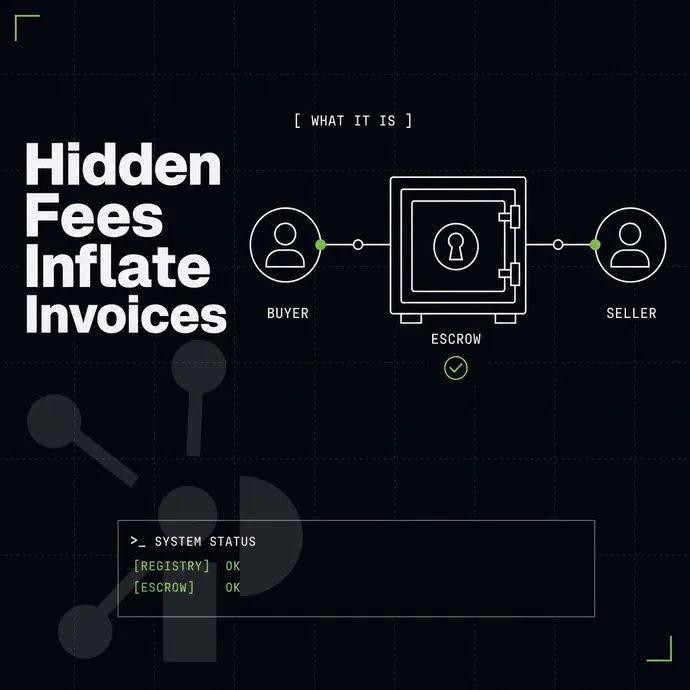
There are two layers of costs to all IPv4 transactions: the broker’s fee and the registry’s administration costs. Understanding both cost components helps buyers evaluate the total expense when working with an IP broker.
How RIR transfer fees work
The fee schedules for the relevant RIRs are published by each of them. For example, the American registry ARIN charges depending on the size of the block to be transferred. For the European registry RIPE NCC the fees depend on the member’s annual service tier. These published fee schedules apply regardless of whether organizations are acquiring IPv4 address blocks through direct allocation or secondary market transfer.
The Asian-Pacific registry APNIC charges based on a similar tiered model, however here the levels depend on the volume of internet numbers that a member has under management. For the Latin-American/Nearscopic registry LACNIC, transfers of IPv4 addresses are facilitated but not registered directly, therefore different costs apply. Understanding these tiered structures helps organizations budget accurately when acquiring IPv4 addresses through any of the regional registries.
These fees are paid to the registry, not to Prefixx. They are shown as a pass-through on the invoice, not as a brokerage fee.
RIPE LIR sponsorship costs
Clients who are renting PI space or have an origin ASN but do not have their own LIR, will need to have a sponsoring LIR for their registry records. Prefixx can function as sponsoring LIR for clients needing IPv4 addresses such as these for a yearly fee of $300 + $300 start fee per object.
This fee goes to the sponsoring-LIR function and not into the transaction margin. Sponsoring LIR arrangements ensure that clients maintain proper administrative contact with the relevant authorities for their IPv4 address space allocations.
What Prefixx actually charges
Prefixx charges no buyer-side fees. Sellers pay a commission of 3% to 8% depending on the size of the block(s) being sold. (Smaller blocks are at the higher end of this range.) All other fees (e.g. Registry fees) are clearly disclosed and added to the seller’s invoice. This transparent pricing structure helps both buyers and sellers understand the broker's role to facilitate a smooth transaction without hidden costs.
All parties on both sides of the network deal then know exactly what they are being charged in total. Next, most people want to know whether to buy this domain outright or to lease it.
Lease invoicing versus purchase invoicing
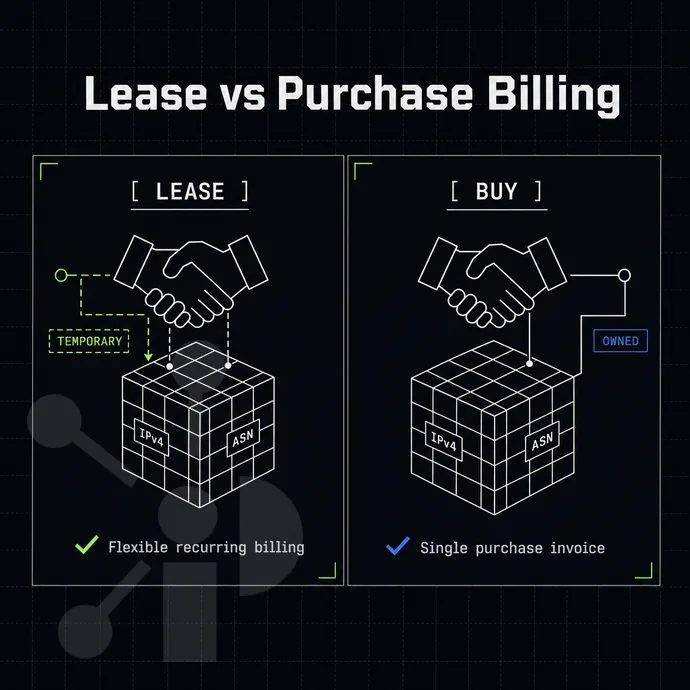
Invoices for IPv4 broker transactions are determined by whether a buyer is purchasing a block of IP addresses or leasing a block of IP addresses on a rental basis with terms and conditions. Invoices for each model reflect different payment schedules, fees and terms. The structure and timing of these invoices depend on the specific terms negotiated between the IP broker and the client at the outset of the transaction.
One-time purchase settlement
A purchase invoice is a single document which includes the block price for your purchase and will close the invoice once the funds from the escrow account have been released to the seller. Confirmation of payment will be sent to both parties and the RIR transfer process initiated. The invoice serves as the primary transaction record and formal documentation for the IP address acquisition.
Recurring lease billing for IP resources
Lease Invoices are sent on a monthly/annual recurring basis.
- The rental rate for the address space.
- Routing authorization (LOA, RPKI ROA, IRR objects prepared by our team).
- White-glove items: geo-correction, rDNS, and reputation monitoring.
We provision within 24 hours and guarantee every lease. Our team provides comprehensive support throughout the lease lifecycle to ensure clients receive the full range of services they need for successful address deployment.
Which model fits your situation
Whether market conditions are best for long-term ownership and a one-time payment or flexibility to scale without a huge upfront commitment and recurring billing, our consultants can outline both models for you prior to signing any agreement. Below is an example of how we work with clients such as yourself. The choice between these approaches often depends on whether your organization prefers to preserve working capital or commit it to a long-term asset.
Why work with Prefixx for your IPv4 addresses transaction
Prefixx is a registered IPv4 broker with ARIN, RIPE NCC and APNIC. Our team manages every commercial transaction from initial consultation through final transfer, so buyers and sellers never chase paperwork. We develop strong relationships across all five RIR regions, giving clients access to qualified buyers and vetted address space fast. This approach ensures clients have direct access to our team throughout the entire process without intermediaries.
- No buyer fees are charged by the website, and a seller only pays a 3-8% brokerage fee on closed transactions.
- transaction holding account-secured payment protects both parties involved.
- Tixx QC verifies every block prior to generation of an invoice.
- We take care of white-glove routing authorisation using LOA, RPKI ROA and IRR for you.
- more than ten years of IP brokerage expertise. No hidden fees.
Please contact us to find out about current offers for buying, selling or leasing IPv4 addresses or to receive a quote.
Frequently asked questions about IP brokerage services
What currency do brokers use to price IPv4 addresses on the market?
Most IPv4 addresses are traded in US dollars, which functions as the de facto global currency for address space transactions across all five RIR regions. As market conditions evolve, the broker will confirm the settlement currency before any offer is accepted, so there are no surprises at closing. Buyers seeking to acquire IPv4 address space will receive invoices denominated in the agreed currency, ensuring transparency throughout the transaction.
Does the buyer pay a brokerage fee when using an IPv4 addresses broker?
At Prefixx, the buyer pays zero brokerage fees. Commission for IPv4 addresses is charged to the seller only, at 3 to 8% of the sale price depending on block size, with smaller blocks at the higher end. This means buyers pay exactly the price they agreed to, with no fee added on top at invoice time. The seller's commission is calculated on the sale price under the agreed conditions set forth in the transfer agreement.
What line items appear on an IPv4 broker invoice for IPv4 addresses?
A typical broker invoice covers the agreed purchase price for the address block and, for the seller, the brokerage commission. RIR transfer fees may appear as a separate line item or be absorbed differently depending on the registry and deal structure. Prefixx addresses the heavy lifting of white-glove services such as LOA preparation, RPKI ROA setup, and IRR route object registration by including them rather than billing as extras. The broker's operational expertise ensures that each invoice reflects the precise deal structure negotiated between the parties.
How does escrow protect both parties in an IPv4 addresses transaction?
A custodial account addresses the risk by holding the buyer's funds with a neutral third party from the moment payment is made. The seller receives the money only after the RIR transfer completes and the buyer confirms the block is clean and routable. This eliminates the two core risks: the buyer losing funds before receiving the addresses, and the seller handing over a block before payment clears. This structure ensures buyers retain control over their funds until all contractual obligations are satisfied and the addresses are verified as operational.
Are RIR transfer fees for IPv4 addresses in the broker's invoice or billed separately?
RIR transfer fees are set by the registries themselves and are not part of the broker's commission. ARIN, RIPE NCC, APNIC, and LACNIC each publish their own fee schedules, and responsibility for those fees as the registered holder is negotiated between buyer and seller as part of the deal terms. A reputable broker will spell out who covers registry fees before the transaction closes, so both parties know exactly what they owe. Transparency in fee allocation is one way brokers demonstrate their reputation and build trust with both sides of the transaction.
An invoice from an IPv4 broker contains more than a simple line item. The currency to be used, the escrow structure and all registry fees all influence the final amount that has to be paid by buyer or seller before a transfer of IP addresses can take place.
When trading IPv4 addresses, it is very important to make a correct calculation before a deal is closed, because otherwise it can take a lot of time to settle the differences or it will eat into the margins.
Lease invoicing versus purchase invoicing also has to be distinguished. A lease creates a ongoing payment obligation whereas an acquisition is a one-off. Depending on the cash flow of your company and your IP strategy with the relevant RIR, you have to decide early on, not after signing a contract, whether this model can be handled efficiently for you.
If you are ready to see what a structured, escrow-secured transaction looks like in practice, Prefixx walks through every invoice line with you before anything is committed. Reach out to get a personalized offer on a vetted block or lease.
Contact us to discuss your IPv4 needs today
No hidden fees, free consult. A broker replies within one business day.