
By Savvas Bout, Founder of Prefixx. Last updated 23 October 2026.
Despite widespread knowledge of APNIC’s IPv4 exhaustion, the operational pressures it creates still manage to catch out infrastructure teams. Although a growth sprint may require address space that doesn’t exist in any free pool, the Asia-Pacific region (where APNIC operates) crossed its exhaustion threshold years ago, and most networks were left to their own devices to come up with a contingency plan. Since then, the only legitimate secondary transfer market for new IPv4 resources has existed.
For network engineers and IP address managers in APNIC regions, depleting IANA's pool meant that addresses are now acquired in exchange for dollars and cents, which significantly impacts their work. All decisions around acquiring necessary addresses, must take into account relevant timelines, transfer rules and block pricing. Engineers must carefully plan their address acquisition strategy to align with operational requirements and budget constraints.
This article outlines how the exhaustion of APNIC allocated IP addresses came to pass, covers the current framework for the transfer of IP addresses. Additionally, Addresses how factors such as the quality of allocated IP address blocks, and the relevant routing, can greatly affect the perceived value of any acquired IP addresses. Finally, the article outlines several practical options available to organizations and individuals who need IP addresses today.
What APNIC IPv4 exhaustion means and why it still matters
IPv4 exhaustion is not something to be concerned with in the future, it currently affects how IP addresses are obtained and how decisions are made with regard to their use. IPv4 created an address space of around 4.3 billion addresses, and they have all now been allocated. For more context, see IPv4 address exhaustion.
What IPv4 address space exhaustion actually means
Originally, the five regional internet registries had assigned IPv4 address space to enterprises, governments and ISPs. When a registry’s free pool of IPv4 addresses had run out, it was no longer possible for an organization to apply for new blocks of addresses. Instead, they had to enter the transfer market of secondary allocations.
The market for routable IPv4 addresses for organizations that still need them has become their only alternative.
When did APNIC exhaust its IPv4 address pool?
APNIC, the Asia Pacific-based Internet number resource registry, became “exhausted” in April 2011. APNIC became the first of the large region-based Internet number resource registries to become “exhausted”. In the aftermath of exhaustion, APNIC transitioned to a last-/8 allocation policy. Under this policy, each member is able to receive a /23 (of 512 addresses) from the reserved 103.0.0.0/8 pool, regardless of demonstrated need.
Given the 512 IP address ceiling of typical local networks in the region, the transfer market is crucial for networks that need more than that.
Why this still matters when acquiring IPv4 address blocks
While early exhaustion at APNIC set a precedent for the other regional registries to follow, IPv4 exhaustion is now a global phenomenon rather than a regional oddity. A detailed look at the history of all five regional internet registries explains why the secondary market for IPv4 looks the way it does today. The scarcity of available IPv4 resources has fundamentally reshaped how networks plan their infrastructure and growth strategies across all regions.
We at Prefixx are brokers of IPv4 address space, and we deal with all five regional registries. We have Tixx quality control in place for all the blocks of IPv4 address space that we sell. Additionally, those blocks are vetted by us across our networks to ensure the highest quality before they are offered to any buyer.
How the global free pool ran out: IANA and the five RIRs
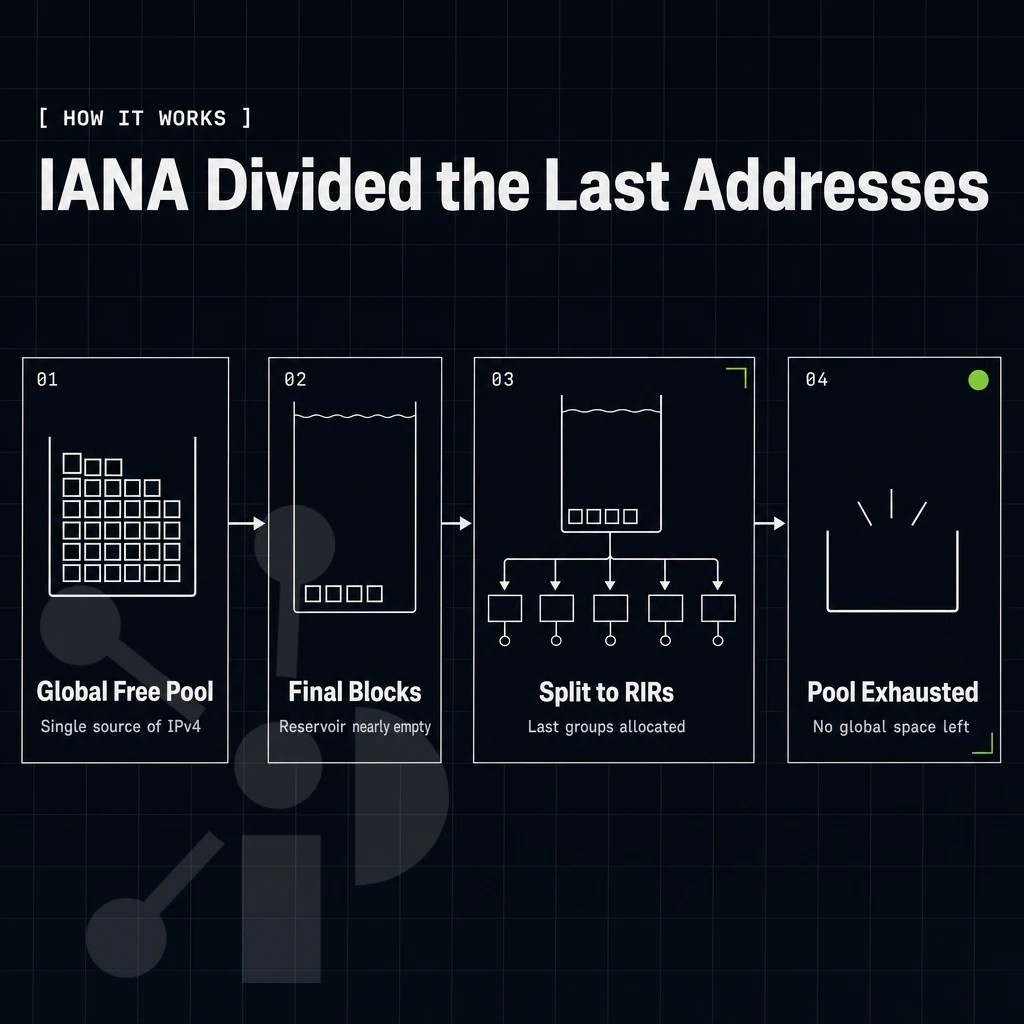
When the internet assigned numbers authority (IANA) was managing a single global free pool of addresses, the five Regional Internet Registries(RIRs) would dynamically allocate address blocks from this pool as needed. The depletion of IANA's pool of free numbers in February 2011 triggered a chain reaction with each of the RIRs distributing a large number of remaining addresses to individual countries and regions over the subsequent nine years.
The regional exhaustion timeline
APNIC, serving Asia-Pacific, was the first to use up the last of the addresses in the regional pool under their control, in April 2011. RIPE NCC, covering Europe, the Middle East and parts of Asia, followed in September 2012. ARIN used up all the addresses in their pool in September 2015. LACNIC, for Latin America, followed in June 2014.
AFRINIC approved the last of the standard allocations for networks around 2020, thus becoming the last of the RIRs to exhaust. The exhaustion event occurred in February 2011 when IANA allocated the final five /8 blocks to the regional registries, triggering the countdown to regional depletion.
| RIR | Region | Exhaustion date |
|---|---|---|
| APNIC | Asia-Pacific | April 2011 |
| RIPE NCC | Europe, Middle East, Central Asia | September 2012 |
| LACNIC | Latin America | June 2014 |
| ARIN | North America | September 2015 |
| AFRINIC | Africa | ~2020 |
How many IPv4 addresses can an APNIC member still get?
The final /22 (1,024 addresses) are provided from the last-resort pool under the APNIC exhaustion policy. After this, no further space is allocated and any additional required space needs to be obtained from the transfer market. This is where space of /24 to /16 is transferred between organizations and needs to be checked for correct use by both the seller and the buyer.
Prefixx buys, sources and vets all IPv4 address blocks on the five main IP address registries (APNIC, ARIN, NCC Group / RIPE, LACNIC, AFRINIC). Each block goes through the Tixx quality check before being sold to a buyer. A secured escrow is created for each transaction, while white-glove routing paperwork is handled across networks from start to finish. The following section describes the changes within the APNIC registry once the IPv4 address exhaustion threshold had been reached.
When APNIC members faced exhaustion: the april 2011 milestone
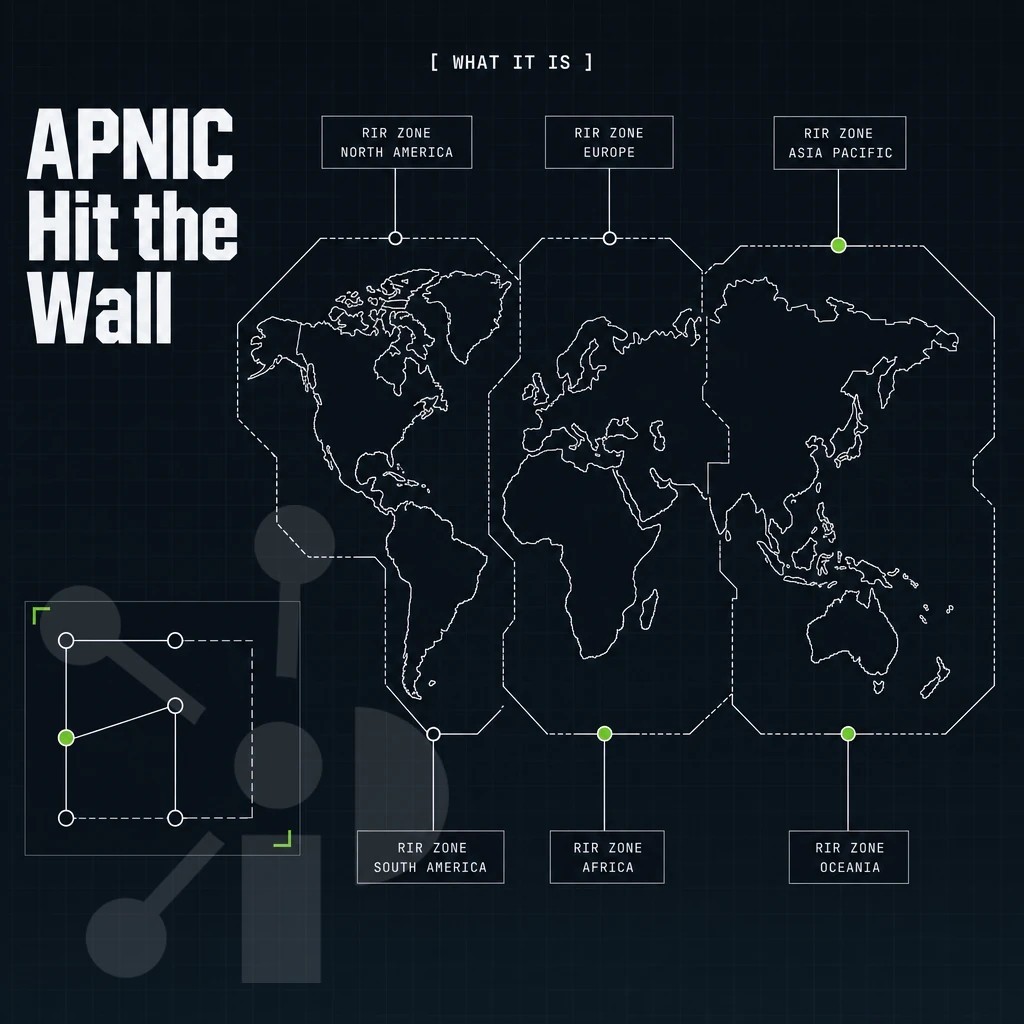
On April 14, 2011 APNIC announced that its free pool of IPv4 addresses consisted of a single /8 block of addresses. Immediately subsequent to this announcement APNIC changed its policies with respect to the allocation of IPv4 address space to restrict significantly the amount of addresses to be allocated, and to rely on the secondary market for the allocation of remaining available addresses.
The announcement marked a watershed moment in internet governance, as February 2011 had already seen IANA allocate the final blocks to the regional registries.
How IPv4 address exhaustion changed APNIC policy
- Recognize the threshold event. Once the free pool was down to one /8 of address space, according to APNIC policy, last-resort mode was activated. In this mode, block 103/8 is reserved space to use as required and is separate from the rest of the non reserved address space that was allocated under normal circumstances.
- Understand the /23 cap. APNIC members are entitled to a maximum of one /23 or 512 addresses from the 103/8 pool under the new rules. The amount of space a member can receive does not increase with need.
- The process of application for allocation is via the normal process of membership. The application for allocation is a request by eligible members via the APNIC portal. Approval for the requested amount of address space is from the available pool of address space within the 103/8 region until that region too is fully exhausted.
What is the APNIC recovered pool and who can access it?
When address space is returned, revoked or reclaimed by APNIC, it is placed into a recovered pool of available address space, distinct from the 103/8 last-resort space. APNIC members in good standing can request space from this pool, as permitted by current policy and demonstrated need.
Note: Recovered space is not guaranteed. Supply is irregular and quantities are small. Organizations needing a reliable block should use the secondary transfer market rather than waiting for recovered allocations.What this means for buyers today
APNIC no longer distributes address space at large scale. Organizations that need a meaningful number of addresses have to acquire them through a transfer. Prefixx assists with APNIC IPv4 address space transfers in a completely end to end manner, starting from sourcing a suitable block through to Tixx quality control of the addresses, and final RIR paperwork.
This background information is followed by an examination of the current APNIC address pool and the possibilities for its members to acquire suitable address space.
The APNIC IPv4 address pool today: what APNIC members can still get
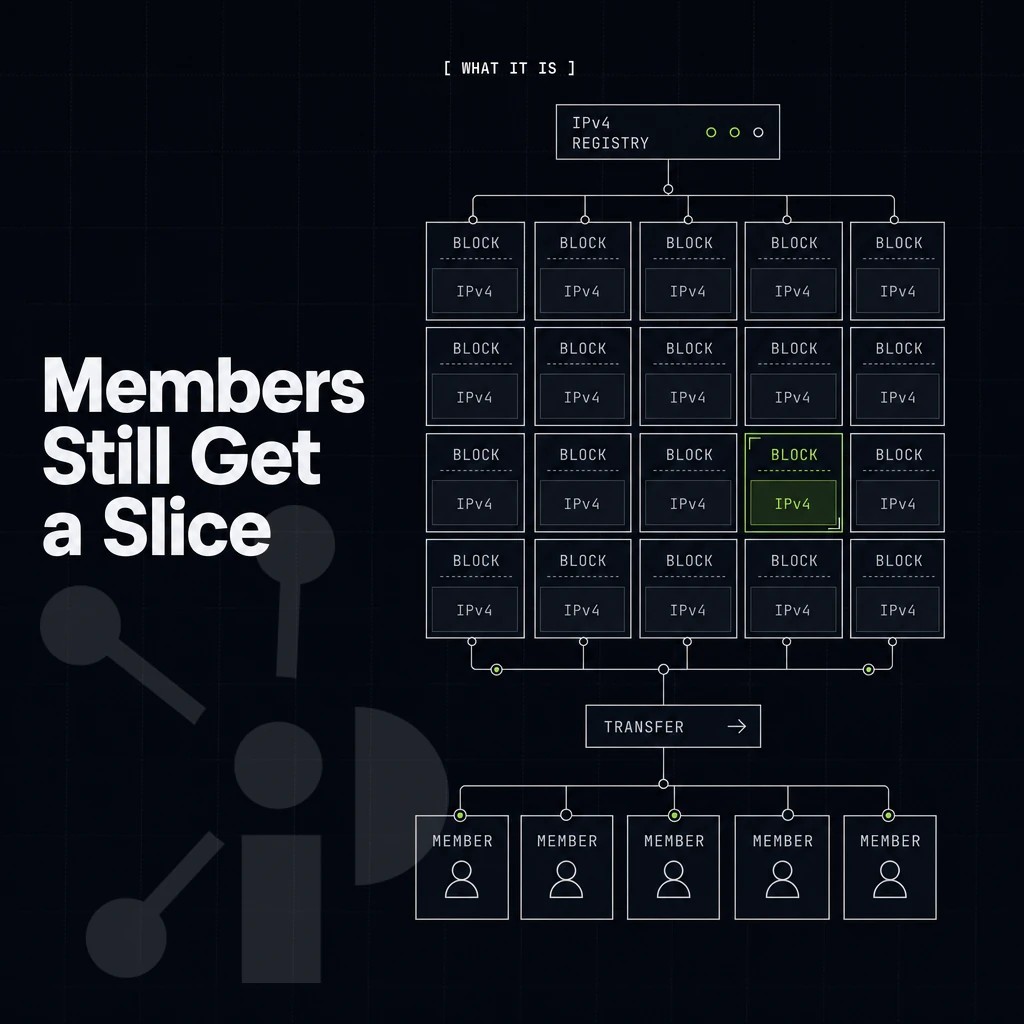
In April 2011 APNIC reached the IPv4 exhaustion threshold. Although the available supply is not zero yet, it is very tight. So in order to find out what exactly a member can get, we need to look at the two pools and one queue.
The /23 cap and the 103/8 internet protocol version pool
All members, whether new or old, are entitled to a /23 of 512 addresses from the 103/8 last-resort pool. Thus, as organizations continue to grow, a new emerging network in APNIC is subject to the same cap as a large and established organization from another part of the world.
The 103/8 block of IP space is reserved for post-exhaustion assignments. The block is not guaranteed to be fully routed on all networks. Members requiring fully routed, globally unique space will need to look to the secondary market for now. Organizations seeking an assignment from the 103/8 block should understand that routing limitations may affect their operational requirements.
The recovered pool and the waiting list
The recovered address space returned due to revocations, resignations or voluntary returns is managed by APNIC and is added to the general pool of available addresses, according to the global policy, as soon as possible. In the meantime, recovered addresses are added to a waiting list of organizations wishing to obtain recovered address space and are allocated in order of the date and time of the request. Allocation is not dependent on Member tier or size.
Can I transfer IPv4 addresses from ARIN or RIPE NCC into the APNIC region?
APNIC supports inter-RIR transfers. These are done under a framework supported by ARIN and the RIPE NCC. A holder in either registry can transfer addresses to a holder in APNIC (an APNIC member) provided both parties meet eligibility requirements of their respective registry.
The receiving member needs to have a justified need for the addresses. Both approval processes of both involved registries need to be cleared before the transfer is completed. Successful implementation of these inter-RIR transfers requires careful coordination of technical documentation and policy compliance across both registries.
The team at Prefixx can handle inter-RIR transfers of IP addresses between ARIN, RIPE NCC, and APNIC for their customers. In the following section, the challenges that organizations with networks in operation in the Asia-Pacific region are experiencing are described in more detail.
IPv4 exhaustion impact on organizations in the asia pacific region
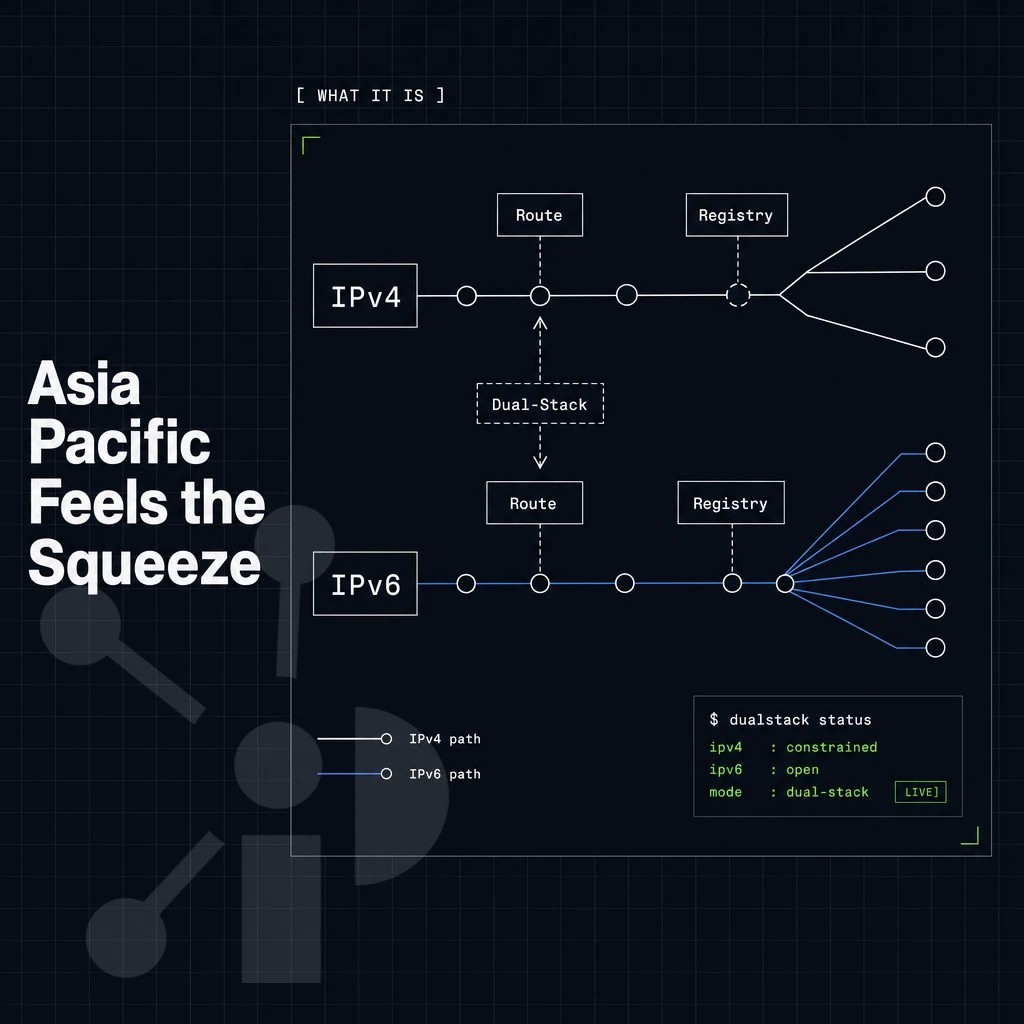
APNIC used up its general pool of addresses in April 2011. Since then all members can immediately receive up to a /23 of internet number resources from the registry. For larger numbers of internet addresses needed for growth and operation of an organization, the ceiling of a /23 is a hard border. Organizations requiring more than this allocation must recognize that only a limited number of addresses remain available through the last-resort mechanism.
The /23 ceiling and what comes after
Although APNIC still issues limited amounts of address space from its last /8 reserve, for each member it is issued in a maximum size of /23. Large amounts of address space thus can not be issued via the registry. A secondary reallocation market is the only alternative.
In the Asia-Pacific region demand for IP addresses is extremely high. On the back of massive growth in connected users brought about by an explosion of mobile devices in Southeast Asia, South Asia and the Pacific Islands ISPs and mobile operators are battling to acquire sufficient IP addresses to service their customers.
As these addresses are not currently available through APNIC directly, ISPs and mobile operators are required to acquire additional addresses. Mobile operators must ensure their infrastructure can support the growing number of connected devices accessing online services and websites.
NAT as a stopgap for internet protocol version exhaustion
To enable continued operation of their networks, many organizations today are running Network Address Translation (NAT). By mapping thousands of private IP addresses to the single public IP address of their external interface, they can deal with the shortage of public IP addresses. The operational complexity, however, of managing connection tracking tables, of dealing with the latency of carrier-grade NAT, and of impaired troubleshooting capability, is considerable. It has never been a good long-term architecture.
Is IPv6 a replacement for an IPv4 address right now?
As long as legacy systems, SaaS suppliers and even some of the Internet service providers are working with IPv4, IPv4 is the operative currency on the Internet. Networks must continue to allocate resources to maintain IPv4 infrastructure alongside any IPv6 deployment efforts.
Our team of Prefixx consultants handle all the paperwork for the conveyance of an APNIC block of IP addresses (such as preparation of LOA and setup of RPKI ROA records for the buyer). Our consultants guide clients through each stage of the process, ensuring smooth implementation of the acquired addresses into their existing network infrastructure.
Secondary market of migration of addresses (so-called “secondary market”) is the mechanism which allows going beyond /23 limit for an address block allocation.
The secondary transfer market: how to get IP addresses beyond the /23 cap
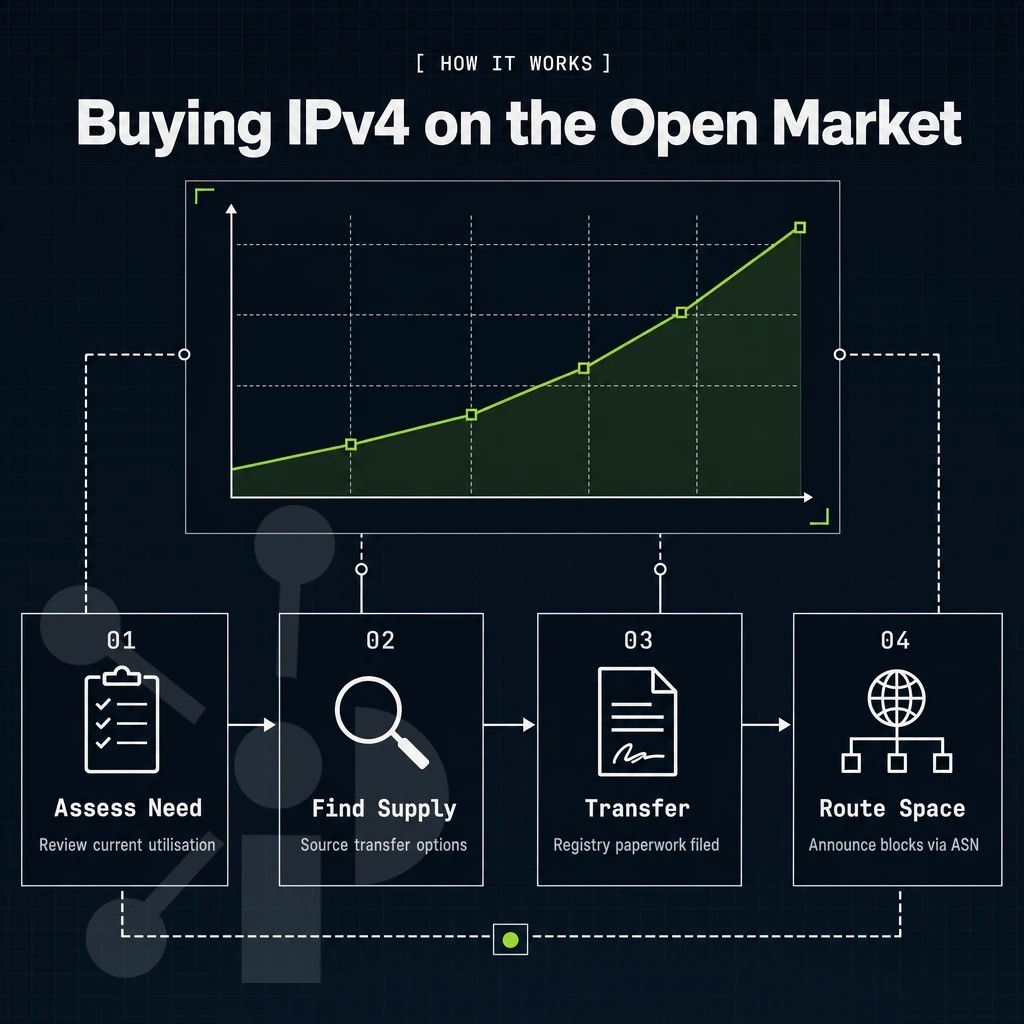
When APNIC’s free pool hit critical levels in April 2011, APNIC became the first RIR to stop issuing direct allocations when the free pool reached critical levels. Now, organizations requiring more than a /23 will need to acquire IP addresses through the secondary transfer market offered by all regional internet registries.
What is the difference between an intra-rir and an inter-rir IPv4 transfer?
Transfers within a single RIR (e.g. intra-RIR handover) are managed within a single registry. APNIC membership is held by both parties and address space is transferred between them under the portability policy of APNIC. Inter-RIR transfers, on the other hand, are between registries (e.g. ARIN (North America) -> APNIC, RIPE NCC (Europe, Middle East, Central Asia) -> buyer in Asia-Pacific). Each RIR needs to approve the redistribution on their side and the time frames for this differ.
How pricing and pool origin affect value
Prices for the same size block can vary. All of the following can affect the price: pool origin, routing hygiene, RIR standing, relocation eligibility. People buying internet space for global connection of services pay a premium for clean, routable space with no history of blacklisting. Buyers prioritize blocks that allow their infrastructure to reliably connect without encountering reputation or deliverability issues.
Choosing the right transfer path
| Transfer type | Registries involved | Key requirement |
|---|---|---|
| Intra-APNIC | APNIC only | Both parties must hold active APNIC membership |
| ARIN to APNIC | ARIN + APNIC | Block must meet ARIN's transfer eligibility rules; APNIC must approve receipt |
| RIPE NCC to APNIC | RIPE NCC + APNIC | Bilateral inter-RIR agreement in place; both sides submit a request |
Today, companies acquiring address space should support this process with a comprehensive check for quality, comparable to what Tixx checks, i.e. verification of ownership, a black list check and a check for correct routing. Prefixx supports the movement of address space within a RIR as well as between RIRs, i.e. for ARIN, RIPE NCC and APNIC.
All documents necessary for the exchange of address space (LOA, RPKI ROA, IRR route object) are created automatically by Prefixx for the client.
IPv6 as the long-term solution: what it does and does not solve right now
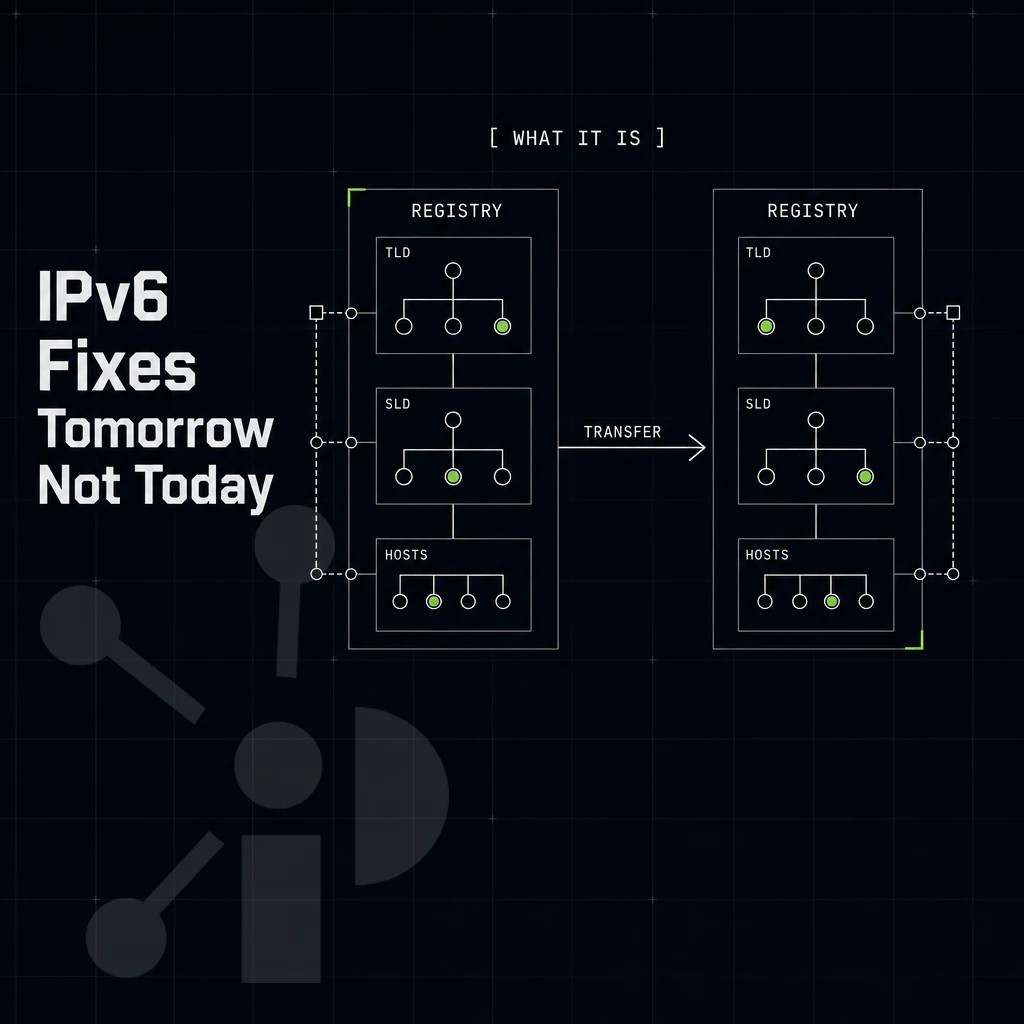
IPv6 is the long term solution to the problem of running out of IP addresses to all five RIRs including APNIC. In IPv6 addressing there is a 128 bit address space as opposed to the 32 bit address space in IPv4. This makes exhaustion of IP addresses a non-issue at large scales. The expanded addressing scheme enables billions of devices to connect simultaneously without the scarcity constraints that have defined IPv4 allocation for years.
IPv6 as a long term solution to IPv4 address exhaustion
- Understand the scale difference here. IPv6 can provide roughly 340 undecillion addresses. So in reality, the number of addresses that the Internet would ever need is actually far less than what the protocol can provide. In reality, therefore, scarcity of address space actually disappears at the protocol level.
- Plan for your network to operate in a dual-stack mode. There are many organizations that are currently running both IPv4 and IPv6 networks. As you transition to fully support IPv6, remember that you will need to have all of your upstream service providers, Content Delivery Networks (CDNs), and applications also be able to support IPv6-only communications. This readiness gap still exists for many organizations.
- First, audit your legacy dependencies. Since so much older hardware and SaaS applications as well as partner networks have not yet migrated to IPv4, you should first identify all of these dependencies before you can decide on a cutover time frame.
Note: IPv6 does not replace IPv4 today. It runs alongside it. Dropping IPv4 prematurely cuts off users and services that have not yet migrated. Dual-stack configurations allow networks to connect using either protocol, ensuring compatibility during the transition period.
How does IPv4 address exhaustion affect the price of blocks?
Since all the registries have long since depleted their pool of IPv4 addresses, the only way to purchase and transaction IPv4 addresses now is on the secondary market. This means that even though demand for every IPv4 address remains extremely high across both established and emerging networks, supply has long since remained fixed, driving up the price over time.
Thus a clean, routable IPv4 address block like a /24 under ARIN will trade at a different rate than an equivalent size block of space traded under RIPE in any given month.
APNIC announces members celebrating exhaustion milestones
When the Asia-Pacific NIC-administered IPv4 address pool size reaches certain thresholds, the Asia-Pacific Network Information Centre announces policy changes. Since the Asia-Pacific RIR’s exhaustion, each the regional internet registry for Asia-Pacific member is entitled to a maximum of a /23. Anything above that has to come from the assignment market. Transfers of IPv4 addresses, crossing registry boundaries, are subject to the specific inter-RIR framework that governs these moves.
Inter-rir transfers and APNIC: moving address space across registries
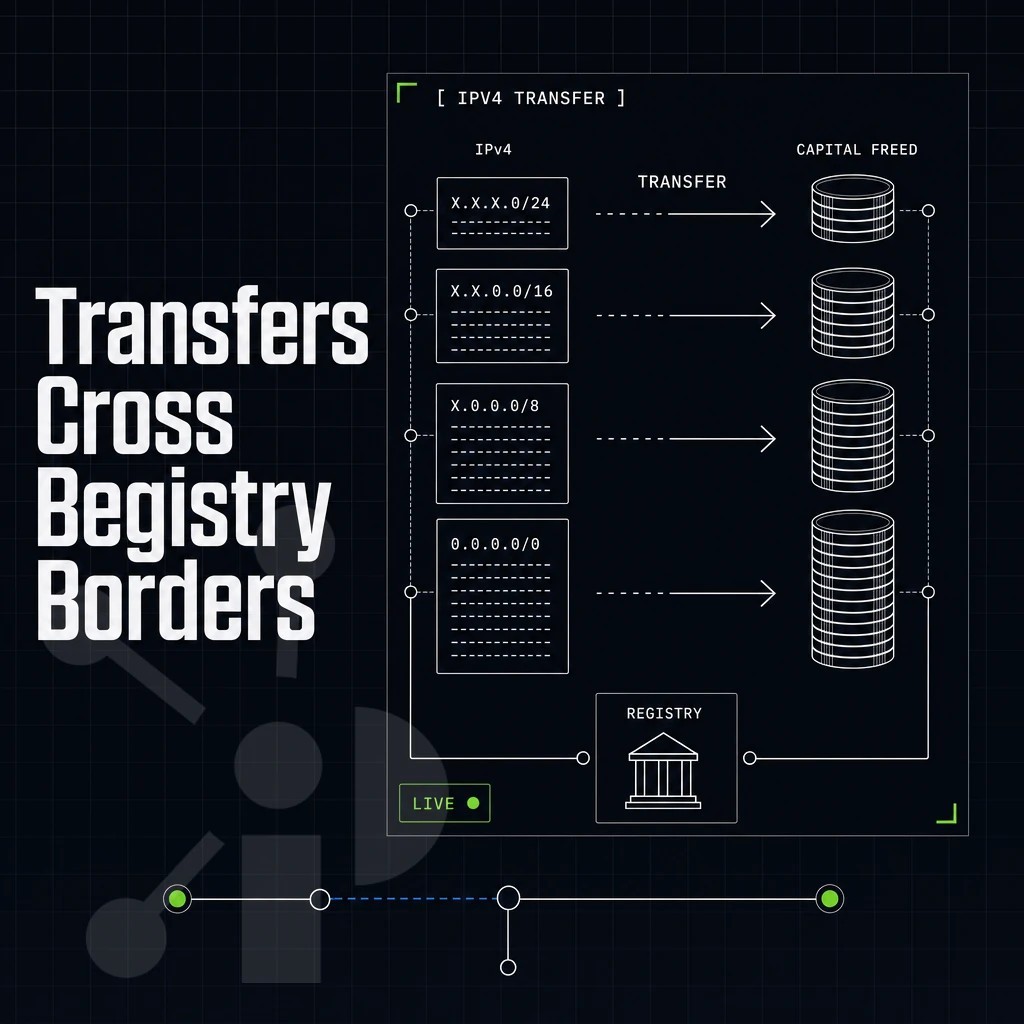
When Asia-Pacific's RIR members require additional IP space, which is not available from their local RIR, they can move to IP address pool held by other RIRs. Global policy for inter-RIR address delegation has been established and is implemented by all five RIRs.
The global policy framework
ARIN, the RIPE registry and the APAC internet registry all set up a reciprocal setup for resources to be transferred between their regions of responsibility. In short, large blocks of numbers assigned by one registry can be re-registered by another, provided both parties adhere to their respective policies.
Transfer eligibility and the exhausted pool
Since the Asia-Pacific address authority exhausted the free pool in 2011, members that need more than a /23 now have to acquire routing space on the secondary market. Requirements for eligibility on the secondary market for non reserved space are RIR clean, no outstanding disputes, and a demonstrated need, according to the receiving registry's criteria.
There is no reciprocal framework for participation, so movements to add Latin American communications networks are facilitated but not executed as a direct inter-RIR handoff.
What Prefixx handles end to end
Our team manages the full paperwork chain: RIR submissions, LOA, RPKI ROA and IRR route objects. For deeper guidance on the mechanics, see our IPv4 transfers pillar page. If you are evaluating whether to buy or lease an IPv4 address block in the Asia-Pacific NIC (the Asia-Pacific RIR) region, the next section covers why Prefixx is the right partner for either path.
Why Prefixx for APNIC region IPv4 transfers and leasing
the Asia-Pacific regional registry’s free pool of IPv4 addresses was completely used up in 2011. Since then, all allocation of new IPv4 addresses in the Asia-Pacific region has come from the secondary market, from recovered pools of addresses, or by inter-RIR transfers. Additionally, Can do transfers to and from LACNIC, enabling single point of contact for organizations that need IP blocks in the five regional Internet registries.
- Zero buyer fees. Sellers only pay a 3-8% commission on the close of a deal, no win, no fee.
- Tixx quality control is applied to every block of IPv4 address pool. Ownership, blacklists, routing, and RIR standing are checked before being sold to buyers.
- All white-glove routing paperwork is included in our service. LOA, RPKI ROA and IRR route objects are completed by our team on your behalf.
- Leased address blocks are provisioned within 24 hours and come with geo-correction, rDNS and reputation monitoring. Non-revocation lease guarantee.
- Multilingual consultants based in 5 different RIR regions. Our senior staff understand the ins and outs of Asia-Pacific's regional internet registry policy and brokerage rules to complete each trading deal.
If your organization needs to acquire, monetize, or route IPv4 address space in the Asia-Pacific IP registry region, explore our inter-RIR transfer service or contact our team to compare options. The key facts below summarize the exhaustion timeline and what it means for your planning.
Key facts about APNIC IPv4 address exhaustion
When the global free pool was exhausted by IANA in February 2011, a cascade of depletion followed for the five regional Internet registries. APNIC was the first of these to exhaust its IPv4 address pool, in April 2011. Since then, members of the Asia-Pacific address registry have been allocated a single /23 from the recovered pool of IPv4 address space, with no upper limit on the size of organization applying for such space.
The recovered pool uses returned, revoked and reclaimed network addresses, which are limited in number and can't fulfill today's requirements. Companies that need larger address spaces can try their luck on the sale market. The only way to obtain adequate IPv4 addresses in the Asia-Pacific registry's registry region is to buy them through a registered broker after having checked their quality.
What the APNIC free pool exhaustion means for your network planning
The free pool of IPv4 IP range has been exhausted by the Asia-Pacific NIC as of April 2011, and IANA has not allocated any further blocks of network IP address pool. Thus, while NAT may buy some time, it does not solve the problem of the IPv4 address shortage. The adoption of IPv6 is increasing rapidly, but it is not yet sufficient to meet the demand for IPv4 addresses in the Asia Pacific and elsewhere.
Prefixx helps you find suitable IPv4 IP address range (which organizations today need in quantities greater than a few hundred IPv4 resources) to buy or lease, all through the secondary market for such routable addresses. Escrow for payment and the white-glove routing of paperwork for you are part of the Prefixx Service.
In April 2011, the APAC address authority, the RIR for the Asia-Pacific region, exhausted the free pool of IPv4 addresses. Now organizations throughout the region have to acquire IPv4 addresses entirely on the secondary acquisition market.
On the procurement market prices for IPv4 addresses are determined not only by the block size, but also by the region of the RIR that issued the addresses, as well as the addresses’ routing history. Therefore, waiting for fresh allocations of free IPv4 addresses is no longer a viable strategy.
For any network expansion, acquisition, or cloud deployment that depends on portable IPv4 space, the practical path runs through a registered broker who can verify block quality, handle APNIC transfer paperwork, and get routing objects in place before traffic flows. Prefixx is registered with the Asia-Pacific internet registry and runs Tixx quality control on every block before it reaches a buyer. If you need vetted the regional IP authority-region space, start an inquiry at Prefixx.net and get a personalized offer within 72 hours.
Contact us to discuss your IPv4 needs today
No hidden fees, free consult. A broker replies within one business day.